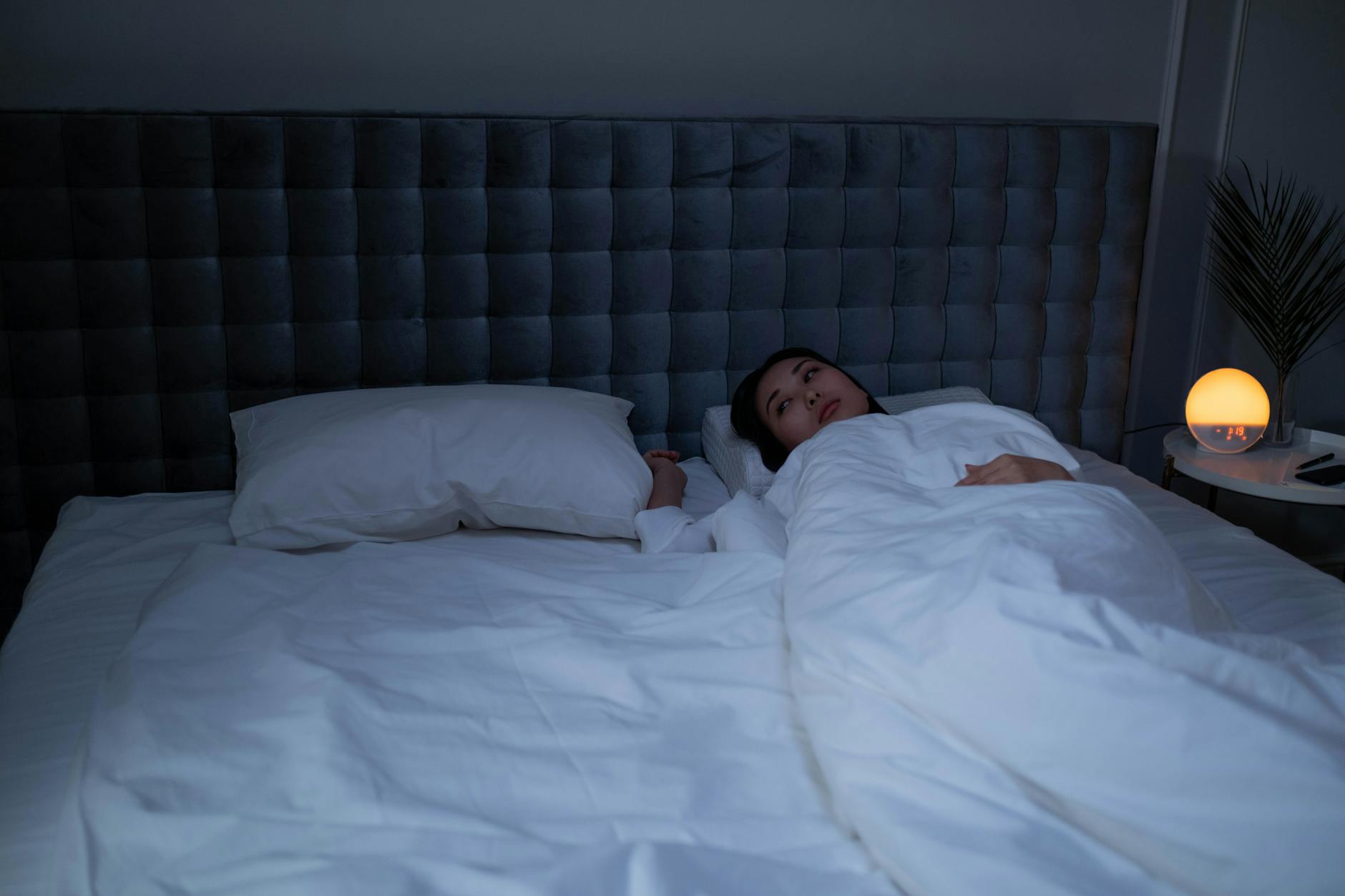
The moment your head hits the pillow, your mind springs to life. Racing thoughts about tomorrow’s meetings, replaying today’s conversations, or worrying about things beyond your control. What should be a time of rest becomes a nightly battle with your own thoughts. Sleep anxiety is more common than you might think, affecting your ability to fall asleep, stay asleep, or feel rested when you wake.
The Cycle of Sleep Anxiety
Sleep anxiety creates a frustrating loop that many people find difficult to break. When you struggle to fall asleep, you naturally begin to worry about the impact on tomorrow’s performance, your health, or simply how tired you’ll feel. This worry activates your body’s stress response, releasing cortisol and adrenaline that make sleep even more elusive.
The anticipation of another sleepless night often begins hours before bedtime. You might find yourself clock-watching throughout the evening, calculating how many hours of sleep you could still get if you fall asleep “right now”. This hypervigilance around sleep transforms your bedroom from a place of rest into a source of stress.
Physical Signs and Symptoms
Sleep anxiety manifests in both mental and physical ways. You might notice your heart racing as you lie down, muscles tensing despite your exhaustion, or feeling uncomfortably aware of your breathing. Some people experience a jittery, restless feeling in their legs or find themselves tossing and turning to find the “perfect” position that never seems to come.
Your mind might feel simultaneously wired and tired, creating that peculiar state where you’re physically exhausted but mentally alert. This combination often leads to frustration, which only adds another layer to the anxiety cycle.
Breaking the Worry Pattern
One effective approach is to create a “worry window” earlier in the day. Set aside 10-15 minutes, ideally in the late afternoon, to write down your concerns and potential solutions. This practice helps contain worries to a specific time rather than allowing them to flood your thoughts at bedtime.
When anxious thoughts arise in bed, try the 5-4-3-2-1 grounding technique. Notice five things you can see (even in dim light), four things you can touch, three things you can hear, two things you can smell, and one thing you can taste. This redirects your attention away from racing thoughts and into the present moment.
Creating a Sleep-Friendly Environment
Your bedroom environment makes a big difference when it comes to sleep anxiety. Keep the space cool, dark, and quiet, using blackout curtains or an eye mask if necessary. Remove or cover digital clocks to prevent clock-watching, and consider keeping electronic devices out of the bedroom entirely.
Establish a consistent pre-sleep routine that signals to your body it’s time to wind down. This might include gentle stretching, reading, or listening to calming music. The key is consistency rather than complexity, your body learns to recognise these cues over time.
Professional Support Options
At The Tunbridge Wells Psychologist, we often work with clients who struggle with sleep anxiety using evidence-based approaches like Cognitive Behavioural Therapy for Insomnia (CBT-I). This specialised form of therapy addresses both the thoughts and behaviours that contribute to sleep difficulties.
Sometimes sleep anxiety is connected to broader anxiety patterns or underlying concerns about health, work, or relationships. A qualified psychologist can help you identify these connections and develop targeted strategies for better sleep and overall wellbeing.
Sleep anxiety doesn’t have to control your nights or impact your days. With the right strategies and support, you can reclaim restful sleep and wake feeling refreshed. If sleep difficulties persist despite trying self-help techniques, consider reaching out to our clinic for professional guidance designed around your specific needs.